




This is a preview of updates coming to the Technical Bulletin's website in April 2026. Return to current site.
Read more about the modernization release schedule in this announcement.
Comment via the yellow feedback button in the lower right hand corner of the page. Contact the NLM Help Desk with any questions or concerns.
This is archived content.
Links may have become inactive over time. Visit Archive-It to find the original published layout.
Try New, Experimental PubMed Search and User Interface in PubMed Labs
Try New, Experimental PubMed Search and User Interface in PubMed Labs. NLM Tech Bull. 2017 Sep-Oct;(418):e9.
October 19, 2017 [posted]
The National Library of Medicine (NLM) needs your input. We are experimenting with a new PubMed search algorithm, as well as a mobile-first user interface, and want to know what you think. You can try out these experimental elements at PubMed Labs, a Web site created for the testing potential new PubMed features and gathering user opinions.
Please note that PubMed Labs includes only a limited set of features at this time and not the full set of PubMed tools. The absence of a feature or tool on PubMed Labs does not mean we plan to eliminate it from PubMed; it simply means we are not testing it now!
The key elements we are testing are:
- A New Search Algorithm for Ranking (Ordering) the Best Matches To Your Query
Based on analysis of data obtained from anonymous PubMed search logs, we have developed a new algorithm that does a much better job of sorting search results by their relevance, or "best match," to your query (see Figure 1). This new algorithm incorporates machine learning to re-rank the top articles returned.
This algorithm is already implemented in PubMed, but it is still experimental and we want your feedback. Part of our test in PubMed Labs is having best match be the default sort, instead of PubMed's default of sorting by most recent articles. If you find that you prefer to sort by the most recent articles instead, it takes only a simple click of a button to do so.
To learn more about the new algorithm, see Updated Algorithm for the PubMed Best Match Sort Order.
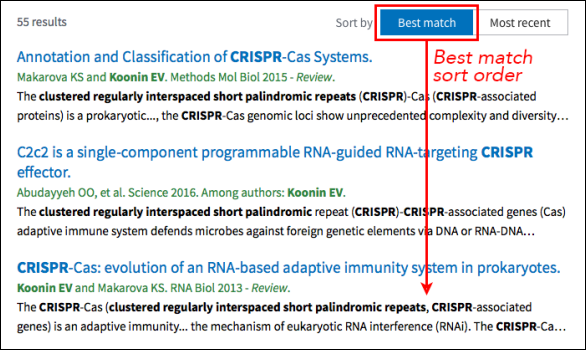
Figure 1: Search results sorted by best match.
- Mobile-first, Responsive Design User Interface
PubMed Labs is designed to make searching and reading articles fast and easy, whether you are using a phone, tablet, laptop or desktop (see Figure 2).
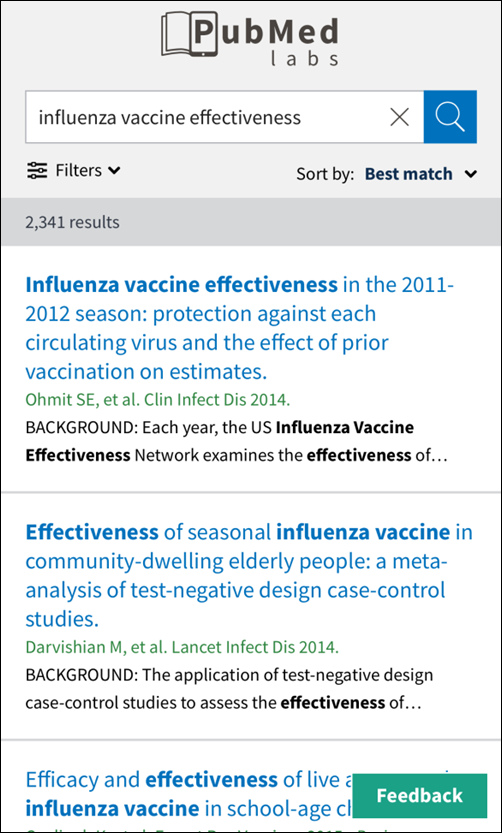
Figure 2: Mobile-first for PubMed Labs.
- Snippets From Article Abstracts & Highlighted Search Terms/Synonyms
The search results page in PubMed Labs includes highlights ("snippets") from the article abstract, when available, that are identified based on their relevance to the user query. Search terms and their synonyms are highlighted in both the title and the snippet (see Figure 3).
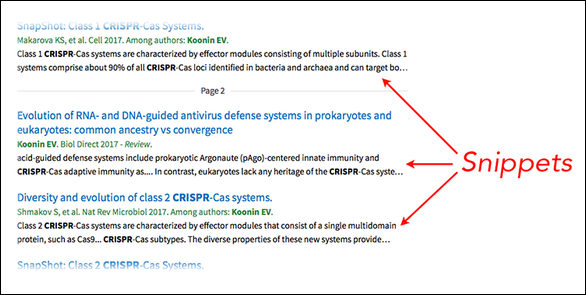
Figure 3: Article abstract snippets in search results.
Comments and Feedback
Go to the NCBI Insights blog post to leave your comments and feedback.