This is a preview of updates coming to the Technical Bulletin's website in April 2026. Return to current site.
Read more about the modernization release schedule in this announcement.
Comment via the yellow feedback button in the lower right hand corner of the page. Contact the NLM Help Desk with any questions or concerns.
This is archived content.
Links may have become inactive over time. Visit Archive-It to find the original published layout.
New PubMed® Field, Location ID, Includes DOIs
Nahin AM. New PubMed® Field, Location ID, Includes DOIs. NLM Tech Bull. 2008 Jul-Aug; (363):e2.
July 11, 2008 [posted]
September 23, 2024
[Editor's note added]
Editor's note: Refer to the PubMed User Guide for the most up-to-date instruction.
In April 2008, a new field, Location ID, was added to PubMed® records. This field was created so publishers can include DOIs (Digital Object Identifiers) and PIIs (Publisher Item Identifier) after the source data of a citation.
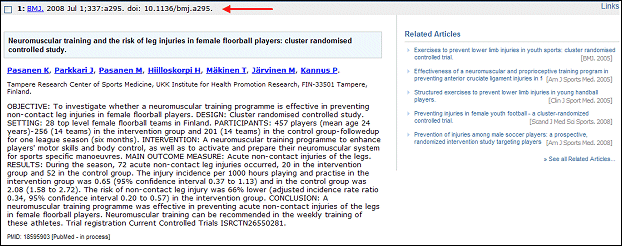
On PubMed's non-tagged formats (e.g., Summary, AbstractPlus) DOIs will display at the end of the source - typically following the pagination or the PII (see Figure 1). PIIs will display only when there is no pagination.
Location ID appears with the field tag LID in the MEDLINE format, and in the ELocationID element of the XML format. (See MEDLINE Data Changes - 2008. NLM Tech Bull. 2007 Nov-Dec; (359):e6. for additional information.)
To search using a Location ID, enter the number in the PubMed search box with the search tag: [lid], e.g., 10.1136/bmj.a295 [lid].
Note: PubMed records will continue to include PIIs and DOIs in the Article ID field (see AID field on the MEDLINE format), if it is supplied by the publisher. This field is used to create links for the LinkOut program; it is not used to create citation source information.